
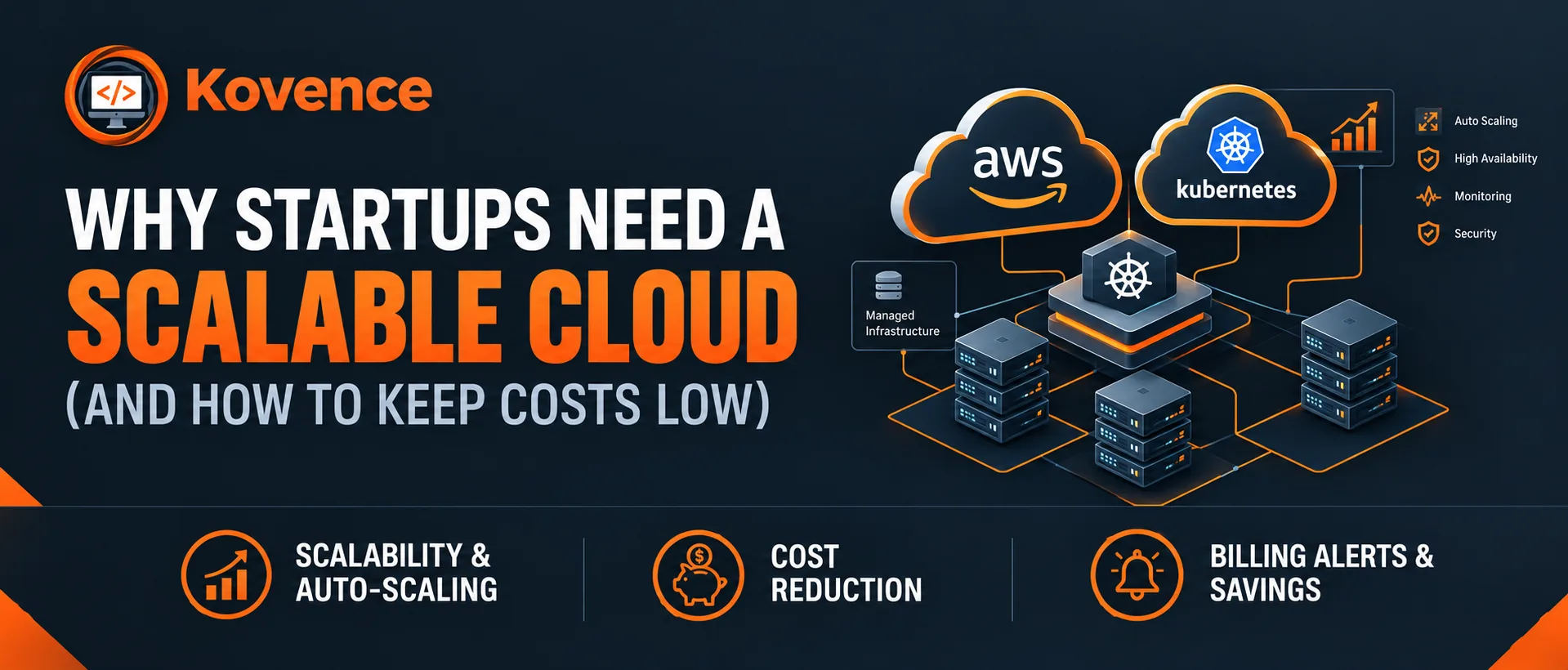
Why Startups Need a Scalable Cloud(And How to Keep Costs Low)
Introduction
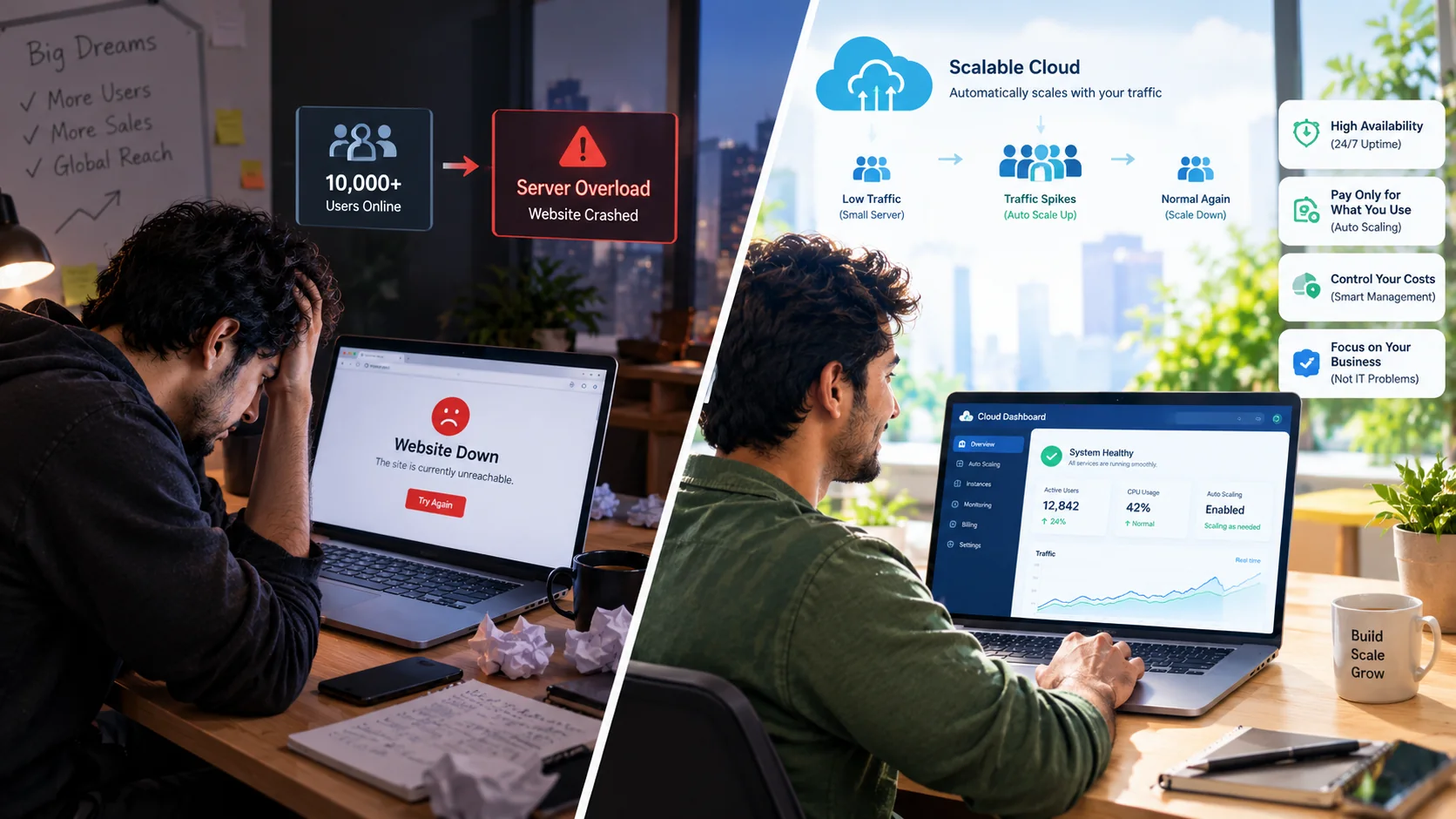
Every startup dreams of going viral. Imagine you launch a new product, people love it, and suddenly thousands of users visit your website from Facebook or YouTube. But instead of getting sales, your website crashes! Why? Because your server could not handle the heavy traffic.
On the other hand, some startups buy huge servers from Day 1 to avoid crashes, but they end up paying a massive cloud bill at the end of the month.
So, how do you balance this? Let’s talk about why scalable cloud infrastructure is a lifesaver and how you can reduce your cloud costs easily.
Part 1: Why Startups Need Scalable Cloud Infrastructure from Day 1
1. Be Ready for Sudden Traffic Spikes (Going Viral)
When your business suddenly gets popular, traditional servers crash because they have a fixed limit. A "Scalable Cloud" acts like magic. If 100 people visit, it uses a small server. If 10,000 people visit suddenly, it automatically adds more power to keep the website running smoothly. When traffic drops, it goes back to normal.
2. Never Lose a Customer
If your app or website is down even for 5 minutes, customers will get angry and go to your competitors. A scalable infrastructure (like AWS, Google Cloud, or Kubernetes) ensures your application is always online, 24/7. No more "Website is down for maintenance" messages.
3. Focus on Business, Not IT Problems
As a startup founder, you should focus on marketing, sales, and product development. You should not worry about fixing server crashes in the middle of the night! Scalable cloud takes the technical headache away.
Part 2: How to Reduce Cloud Computing Costs (Stop Wasting Money!)
Many business owners are scared of cloud computing because they think the bills will go out of control. But if you manage it smartly, it is very cost-effective. Here are 4 simple ways to reduce your cloud bill:
1. Pay Only for What You Use (Auto-Scaling)
This is the best part of the modern cloud. When traffic is high during the day, the server scales up. But at night, when your customers are sleeping and traffic is low, it automatically scales down. You only pay for the exact power you use, not a fixed high rent.
2. Turn Off Unused Servers
Many developers keep their "testing" or "development" servers running all day and night. If your team only works 8 hours a day, turn off those test servers for the remaining 16 hours. This simple trick can cut your testing server bill by more than 60%!
3. Choose the Right Server Size
Do not buy a Ferrari if you only need a bicycle. Many startups buy massive servers thinking they might need them in the future. Start small, monitor your app, and upgrade only when your business actually grows.
4. Set Up Billing Alerts
Always set an alarm on your cloud account. For example, if your bill crosses $50, you will get an email immediately. This stops surprise bills at the end of the month so you stay within your budget.
Conclusion
For any growing startup, having a scalable cloud is not a luxury; it is a basic need. It protects your brand reputation by stopping server crashes during peak times, and it saves your money during low traffic.
Are you worried about high server costs or website crashes? Do you need help setting up a scalable and budget-friendly cloud for your business? The expert tech team at Kovence is here to help you. Let’s scale your business together without breaking the bank!